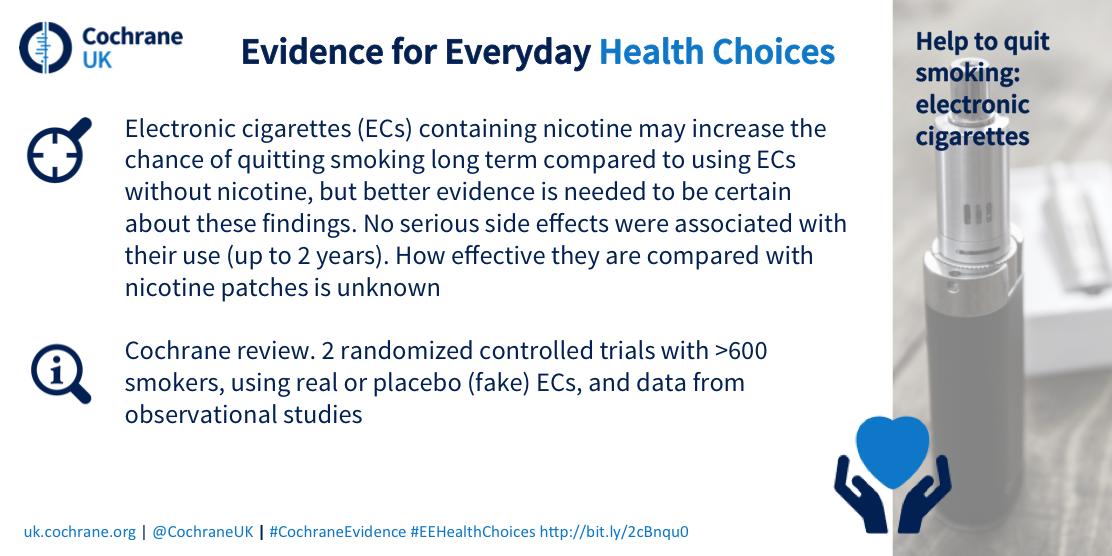
Silver-toned metal exterior highlighting industrial form

Under the Family Smoking Prevention and Tobacco Control Act, the 2009 law that the FDA successfully construed as giving it the authority to regulate e-cigarettes as "tobacco products," the agency is supposed to issue a marketing order only when it is "appropriate for the protection of the public health," taking into account "the risks and benefits to the population as a whole, including users and nonusers of the tobacco product." The FDA is required to consider "the increased or decreased likelihood that existing users of tobacco products will stop using such products" as well as "the increased or decreased likelihood that those who do not use tobacco products will start using such products." Right away there is an obvious problem with this standard, since it hinges not on the interests of individual consumers but on the FDA's prediction of how a product will affect "the population as a whole." That collectivist calculus is not only inherently difficult and uncertain
However, there is evidence of a conspiracy: a loosely connected series of unlawful manoeuvres against an elected government by a group of like-minded figures
NO, says authority Eric Northrup, and gives surprising reasons why. Article by Eric Northrup ARGOSY January, 1958 Eric Northrup was the pen name of Leo Nemiroff [1914-2001], a science writer for the medical publication Scope Weekly and the author of a 1957 book Science Looks At Smoking: A new inquiry into the effects of smoking on your health (New York: Coward-McCann), which disputed the statistical link between smoking and health
However, some researchers suggested no relationship between smoking and testosterone level